
Most Cleaning Businesses Lose Profit Between the Jobs
Busy does not always mean profitable. A lot of profit disappears quietly in the gaps between cleans.
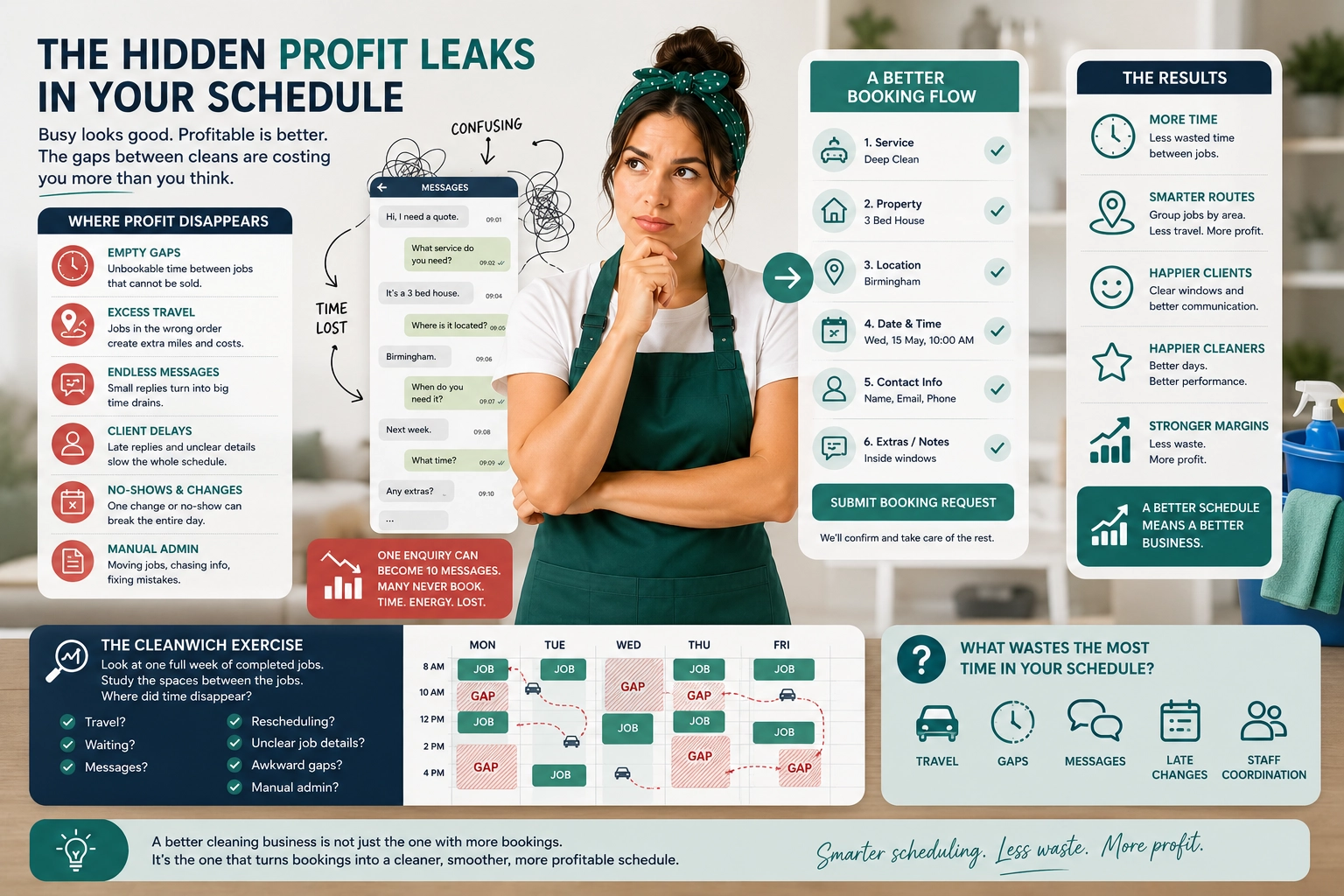
Many cleaning businesses focus heavily on pricing and bookings, but profit often disappears somewhere else entirely.
It disappears in the awkward gaps between jobs, unnecessary travel, delays, unclear communication, and small operational inefficiencies repeated every day.
On paper, the schedule looks full. In reality, the business may still be leaking margin constantly.
1. Small Gaps Quietly Destroy Efficiency
One empty hour between cleans may not seem important.
But repeated across multiple cleaners and multiple days, those gaps become expensive.
- • Empty travel time
- • Unused schedule space
- • Lost earning capacity
Busy schedules can still contain large amounts of invisible waste.
2. Travel Time Is a Hidden Margin Killer
Poor job ordering creates unnecessary miles, fuel costs, delays, and staff fatigue.
- • Jobs booked too far apart
- • Routes not grouped by area
- • Cleaners crossing the city unnecessarily
Travel is often one of the biggest hidden profit leaks in a cleaning business.
3. Small Admin Tasks Become Big Time Drains
A “quick message” rarely stays quick.
Manual admin accumulates across the day:
- • Chasing customer replies
- • Re-checking schedules
- • Updating staff manually
- • Moving jobs around
- • Fixing missing details
Small interruptions repeated constantly reduce focus and reduce profitability.
4. Scheduling Is Not Just a Calendar Problem
A lot of cleaning businesses treat scheduling like a simple diary task.
In reality, scheduling affects:
- • Profit margins
- • Staff performance
- • Customer satisfaction
- • Travel efficiency
- • Business stress levels
Better scheduling creates a smoother and more profitable operation overall.
5. A Better Schedule Starts Before the Cleaner Arrives
Many schedule problems begin because information was unclear from the start.
- • Missing access details
- • Unclear job requirements
- • Poor arrival expectations
- • Last-minute changes not tracked properly
Good operational structure reduces friction before the cleaner even travels to the property.
6. The Cleanwich Scheduling Exercise
Look at one full week of completed jobs.
Do not only study the revenue. Study the spaces between the jobs.
- • Where did time disappear?
- • Where did delays happen?
- • Which gaps could have been avoided?
- • Which tasks created unnecessary admin?
- • Which routes wasted time?
Hidden profit leaks usually appear inside the operational details most businesses ignore.
Turn time into profit
Cleanwich helps cleaning businesses organise scheduling, reduce unnecessary admin, improve routing, and create smoother operational workflows.
Explore how it works →Final Thoughts
A better cleaning business is not always the one with more bookings.
It is often the one that turns bookings into a cleaner, smoother, and more profitable schedule with less wasted time between jobs.
Related guides

How to Manage Cleaning Staff
Build a reliable team and avoid daily operational chaos.
Read guide →
Cleaning Service Pricing Guide
Complete breakdown of pricing models and structures.
Read guide →
Best Online Booking Form for Cleaning Services
What modern booking forms should include today.
Read guide →


